
When patients ask about crowns vs. veneers, the confusion is completely understandable. Both options can transform a smile in Ann Arbor, MI — but they serve very different clinical purposes. Choosing the wrong one can lead to unnecessary tooth reduction or a restoration that simply won’t last. Understanding the clinical reasoning behind each choice helps you have a much more informed conversation with Dr. Shah.
What Are Crowns and Veneers — and How Are They Different?
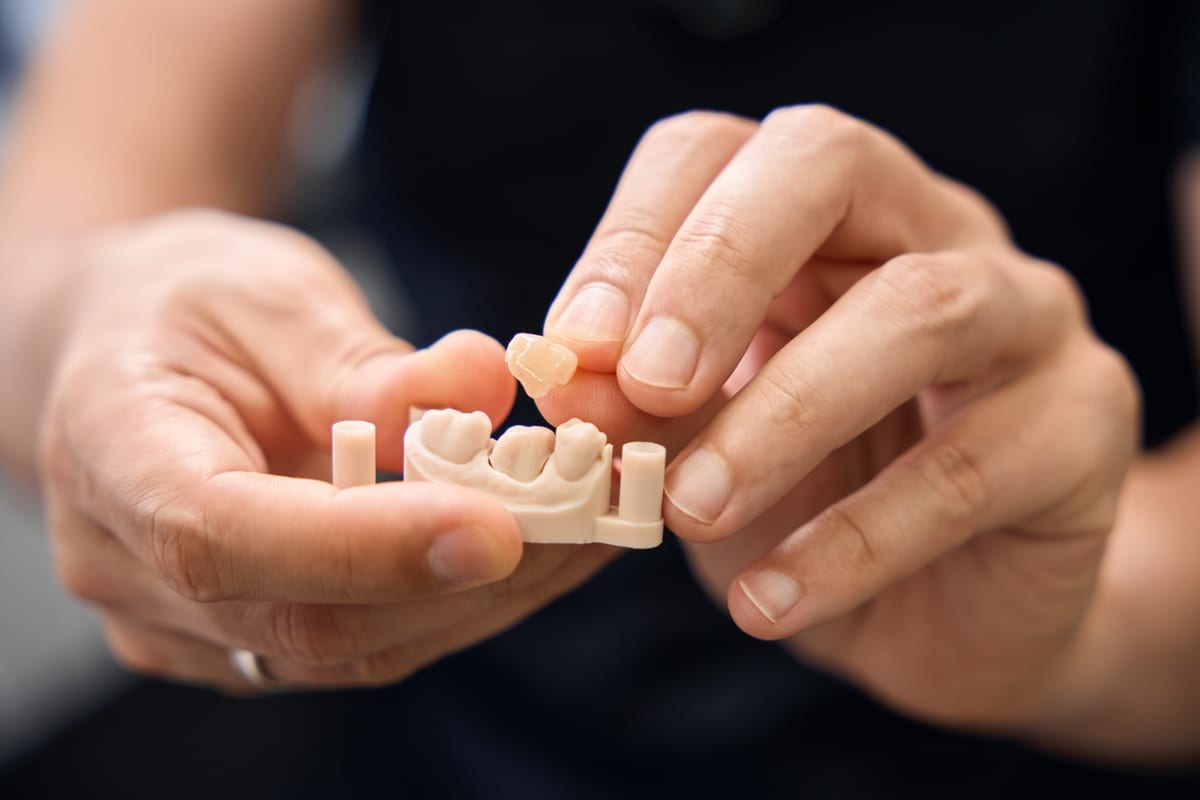
A dental crown covers the entire tooth from all sides. It acts like a protective cap that surrounds the visible portion of the tooth above the gumline. Crowns are typically made from porcelain, zirconia, or porcelain-fused-to-metal.
A veneer, by contrast, only covers the front-facing surface of the tooth. It is a thin shell — usually porcelain — bonded directly to the enamel. Veneers require far less tooth removal than crowns.
The key distinction is coverage. A crown restores a tooth from every angle. A veneer improves the appearance from the front only. This structural difference drives nearly every clinical decision a dentist makes.
When a Crown Is the Right Clinical Choice
Dr. Shah typically recommends a crown when the tooth’s structure is compromised. This happens more often than patients expect. A large cavity, a cracked tooth, or a failed filling can all leave too little healthy tooth remaining for a veneer to bond to effectively.
Crowns are also the standard of care after a root canal. The treated tooth becomes more brittle over time. A crown protects it from fracturing under daily biting pressure.
Here are the most common clinical reasons Dr. Shah recommends a crown:
- The tooth has lost more than 50% of its natural structure
- A root canal has been performed on the tooth
- The tooth is cracked or fractured and at risk of splitting
- An existing large filling has failed or is failing
- The tooth needs to anchor a dental bridge
- Severe wear has affected the tooth’s biting surface
Notice that most of these situations involve function and structural integrity — not aesthetics alone. A crown is chosen when the tooth needs to be protected, not just prettied up.
When a Veneer Is the Right Clinical Choice in Ann Arbor
Veneers are the right tool when the underlying tooth is essentially healthy and strong. The goal is cosmetic improvement, not structural restoration. This is a critical distinction that many patients miss.
Good candidates for Dental Veneers Ann Arbor typically have teeth that are discolored, slightly misshapen, mildly chipped, or have small gaps between them. The enamel must be thick enough to bond to after the thin layer of preparation is removed.
Veneers are not ideal for teeth that have significant structural damage. They also won’t work well for patients who grind their teeth heavily, since the thin porcelain can fracture under that kind of pressure.
Here are situations where veneers are typically the better fit:
- Deep staining that does not respond to whitening treatments
- Minor chips on otherwise healthy front teeth
- Slight gaps or spacing irregularities between front teeth
- Teeth that are slightly uneven in length or shape
- Peg laterals or naturally small teeth needing resizing
Veneers are a conservative option compared to crowns — but only when the tooth can support them. The word conservative here means less tooth structure is removed, not that it is a lesser treatment.
The Role of Dental Bonding in This Decision
There is a third option that often gets overlooked in the crowns-vs.-veneers conversation. Dental Bonding Ann Arbor uses a tooth-colored resin applied directly to the tooth. It requires little to no enamel removal and can be completed in a single visit.
Bonding is often a strong choice for minor chips, small gaps, or surface discoloration on healthy teeth. It costs less than veneers and preserves the most tooth structure. However, bonding is less durable than porcelain and may need to be touched up or replaced sooner.
Dr. Shah considers bonding as a starting point when the cosmetic concern is minor and the patient wants a reversible, lower-commitment option. If the damage is more extensive or durability is the priority, veneers or a crown become the better recommendation.
How Dr. Shah Makes the Final Recommendation
No two teeth are identical. The clinical decision between a crown and a veneer depends on a thorough examination. Dr. Shah evaluates the amount of remaining healthy tooth structure, X-rays showing what is happening beneath the surface, and how the tooth functions within your bite.
Patients in Ann Arbor often come in expecting one treatment and leave understanding why another option serves them better. That is not a sales pitch — it is the result of a proper clinical assessment. A veneer placed over a structurally weak tooth will not last. A crown placed on a cosmetically imperfect but otherwise healthy tooth removes more structure than necessary.
The goal is always to preserve as much of your natural tooth as possible while choosing a restoration that will actually hold up long-term. That principle guides every recommendation Dr. Shah makes.
Conclusion
Understanding crowns vs. veneers comes down to one core question: does your tooth need protection or cosmetic enhancement? Structural damage, fractures, and post-root canal teeth call for a crown. Healthy teeth with surface-level cosmetic concerns are better served by veneers or bonding. Both options can produce beautiful, lasting results — but only when matched to the right clinical situation. If you are unsure which option applies to your tooth, a consultation with Dr. Shah will give you a clear, honest answer. Book Now to schedule your appointment with our team.
Frequently Asked Questions
Can a veneer be placed over a cracked tooth?
Generally, no. A veneer only covers the front surface of a tooth and does not reinforce the underlying structure. If a tooth is cracked, a crown is usually necessary to hold the tooth together and prevent the crack from spreading. Dr. Shah will assess the extent of the crack to determine which option is appropriate.
Do crowns look as natural as veneers?
Modern crowns — especially those made from full zirconia or porcelain — can look extremely natural. Veneers are often praised for their aesthetics because they mimic natural enamel very closely. In both cases, the goal is a restoration that blends seamlessly with your surrounding teeth. Dr. Shah will discuss material options based on the location and visibility of the tooth.
Is getting a veneer reversible?
Veneers are considered a permanent restoration because a thin layer of enamel is removed to accommodate the porcelain shell. That enamel does not grow back. This is why the health of your tooth before treatment matters so much. Bonding is a more reversible alternative if you want to preserve all of your enamel.
How long do crowns and veneers last?
With proper care, dental crowns typically last 10 to 15 years or longer. Veneers often last 10 to 20 years depending on the material and how well they are maintained. Habits like teeth grinding, biting fingernails, or chewing hard foods can shorten the lifespan of either restoration. Regular checkups at Stadium Family Dentistry help catch any early signs of wear or damage.
What if I need both a crown and a veneer in the same smile makeover?
This is quite common. Some teeth in your smile may be structurally compromised and need crowns, while others are healthy and only need veneers for cosmetic improvement. Dr. Shah coordinates treatment so that all restorations match in color, shape, and translucency. The result is a cohesive, natural-looking smile even when different restorations are used across multiple teeth.

By Stadium Family Dentistry

New patients and emergency appointments welcome
